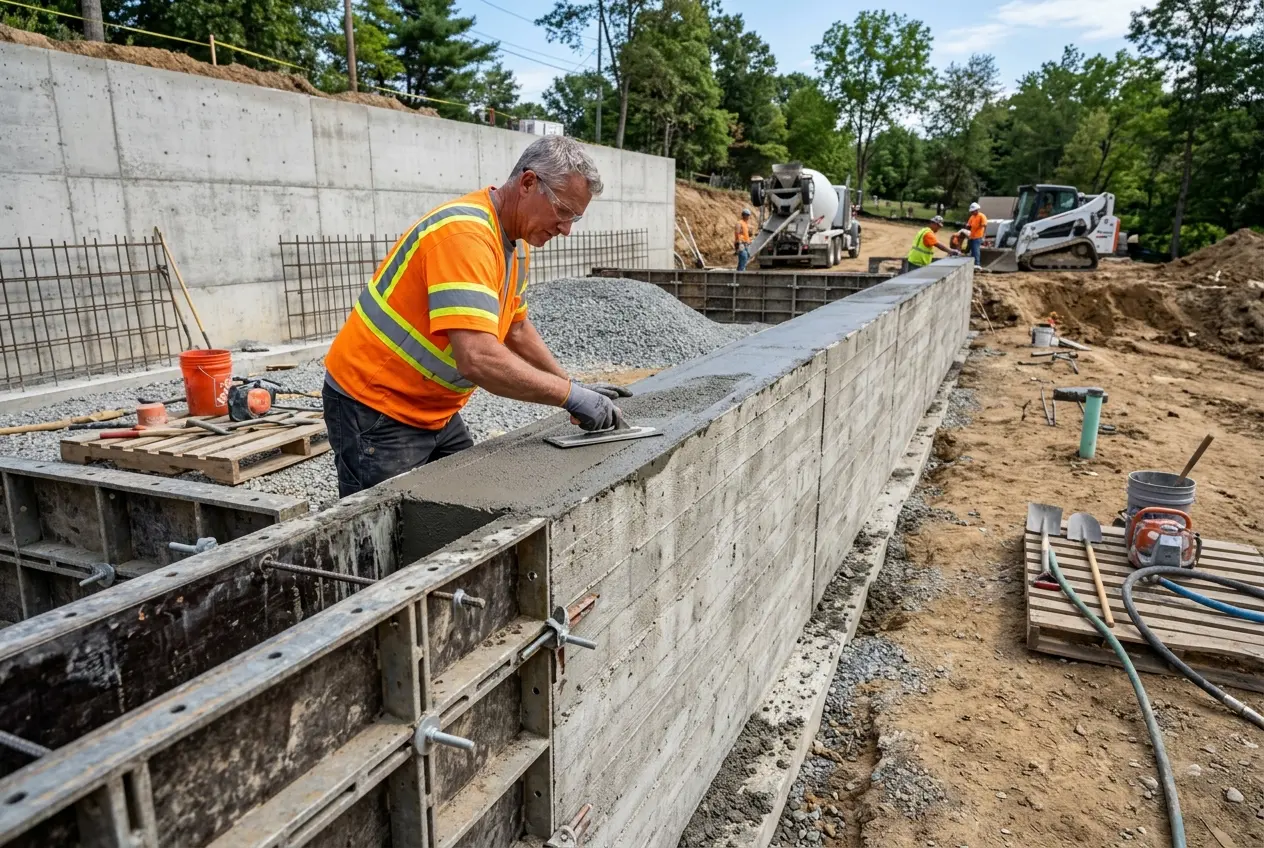
Erosion ruins landscapes in Lakewood’s hilly neighborhoods. Our reinforced concrete walls hold back 10+ tons of soil pressure, using deadmen anchors and proper weep holes—unlike failing railroad tie walls we often replace.
For modern designs in RiNo, we pour cantilevered walls with clean lines. In older areas like Capitol Hill, we match historic stone aesthetics with formliners. All walls include 2” rigid insulation on the backfill side to prevent frost damage, a must for Colorado’s freeze-thaw cycles. Drainage systems channel water away from foundations, solving basement moisture issues common in Littleton’s clay-heavy lots.
For modern designs in RiNo, we pour cantilevered walls with clean lines. In older areas like Capitol Hill, we match historic stone aesthetics with formliners. All walls include 2” rigid insulation on the backfill side to prevent frost damage, a must for Colorado’s freeze-thaw cycles. Drainage systems channel water away from foundations, solving basement moisture issues common in Littleton’s clay-heavy lots.
Our Process
- 01 Step 1: Engineer wall design for soil type and load
- 02 Step 2: Dig keyway footing below frost line (42” in Denver)
- 03 Step 3: Pour wall with vertical rebar and drainage pipe
- 04 Step 4: Backfill with gravel and compact in lifts
Benefits
- Engineer-stamped plans available
- No bowing or leaning over time
- Integrated lighting conduits available
- Load-rated for vehicle impacts
Frequently Asked Questions
How high can you build without permits?
Denver allows 4’ walls without engineering. We handle permits for taller walls—common in steep lots near Red Rocks.
Do walls need maintenance?
Our walls are virtually maintenance-free. Just check weep holes annually—we’ll show you how.